John McCravy is the representative from SC House District #13…
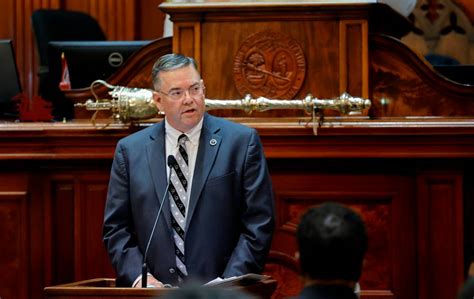
The following article, written by Rep. John McCravy, is from the Greenwood Index-Journal.
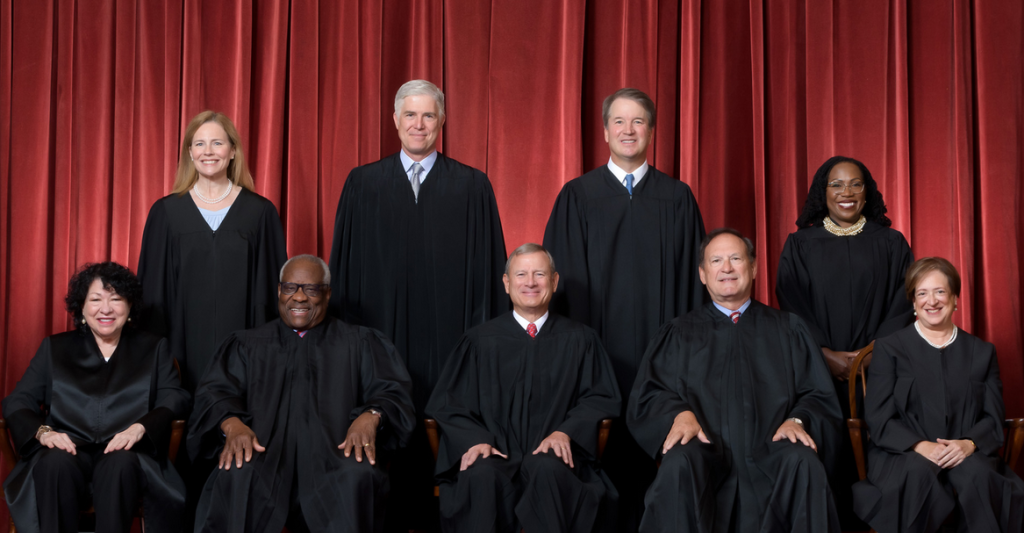
This term of the U.S. Supreme Court seems to have brought a sense of unity for the six conservative justices delivering a series of landmark decisions. Four of those recent 6-3 decisions will directly affect policy here in our Palmetto State.
1. Medina v. Planned Parenthood: This case began in 2018 when Gov. Henry McMaster issued an executive order completely defunding Planned Parenthood from receiving any Medicaid funds in this state regardless of the services provided, since all funds to Planned Parenthood support an organization whose major mission includes aborting children. Of course, the lower federal courts enjoined the order until Justice Neil Gorsuch wrote that Medicaid benefits from the government do not constitute a “civil right.” The court held that if there is any remedy for state defiance of federal regulations it will have to be from the federal executive branch, not potential beneficiaries. Our legislative S.C. Family Caucus as well as our governor has been thwarted for eight years by the federal courts but those days have finally ended.
S.C. and National Impact. Not only will S.C. be able to deny Planned Parenthood all funding, but other red states will surely follow suit with their own executive orders and legislation to prevent the taxpayer from being required to fund Planned Parenthood. This decision will most certainly make any other organizations that promote abortion vulnerable for defunding.
2. US v. Skrmetti: This Tennessee case concerned the right of Tennessee to pass a law banning puberty blocker drugs, hormones and surgery on minors with the controversial diagnosis of “gender dysphoria.” Chief Justice John Roberts, writing the opinion for the majority found the argument of sex discrimination could not prevail since the law was based on age and medical reason for treatment rather than sex. Therefore, instead of the standard of review of “strict scrutiny” the question is only whether the state had a “rational basis” for the law.
S.C. Impact: Our Legislature passed the Help Not Harm bill in 2024, banning the medical use of drugs, hormones and surgery on minors trying to “change” their biological sex. The Help Not Harm law has almost identical language to the Tennessee bill, thereby ensuring any challenge to our law will be unsuccessful. This will continue to hamper the latest activities of Planned Parenthood, including the practice of “gender transition services” for profit.
3. Free Speech Coalition v. Paxton: Texas passed a law requiring pornography sites to require strict age verification for access to pornography websites. Studies are uncontroverted that exposure to porn at an early age is harmful to children, is addictive and leads to risky sexual behaviors. The law was challenged on Freedom of Speech grounds. Justice Clarence Thomas wrote the opinion upholding the law. He stated “unlike a store clerk, a website operator does not look at its visitors and estimate their ages. Without a requirement for proof of age, even clearly underage minors would be able to access inappropriate content undetected.”
S.C. Impact: Like Texas, our legislature passed the same “strict age verification” law in South Carolina last session. Thanks to our SCOTUS conservative majority, the threat of challenge to this law is eliminated and S.C. minors will now be shielded from easy access and online exploitation. As a side benefit, many of the main providers of smut will decide to shut down their sites in S.C. rather than require users to download their ID.
4. Mahmoud v. Taylor: When the Board of Education introduced a variety of LGBTQ+ inclusive storybooks into their curriculum, parents took exception. The board doubled down by stating it would not give notice about when the books would be used, and attendance would be mandatory. Justice Samuel Alito, writing for the majority held that the actions of the school board violated the religious liberty of parents and the Board must provide an “opt out” for parents.
S.C. Impact: I think it can be fairly implied from this opinion that parents may require, and school boards must provide, notice any time curriculum contains LGBTQ sexuality and gender views that violate the religious world view of Christian parents. They must also provide, at a minimum, “opt out” avenues for children of parents who make the request. While the General Assembly has failed so far to empower parents with direct legislation concerning transparency in curriculum, this decision will predictably have that affect. The S.C. Board of Education and its “curriculum committee” (as well as local boards of education), should now take this opportunity to rid our curriculum of this type of indoctrination found repeatedly in “state-approved” media.