In 2014, 2018, 2020 and, again, in 2024, an advisory question appeared on Republican primary ballots to assess the level of support Republican voters had for Closed Primaries. Both times, around 84% of voters expressed a preference for closing our primaries.
In a closed primary, a voter must be formally registered with a specific political party (like Democrat or Republican) to participate in that party’s primary election. Unaffiliated (independent) voters and members of other parties are generally barred from voting in a party’s closed primary.
Despite strong support for closed primaries among Republican primary voters, these bills have not yet received a committee hearing. Thus, our deep red state continues to remain at dark pink status, adding to the frustration of GOP grassroots voters who tire of sending majorities to the General Assembly who do not properly respect their wishes.
Why have None of these Bills ever Become Law?
Democrats, and many liberal groups like the ACLU of South Carolina and other “good‑government” groups oppose these bill. They argue that this policy would reduce voter access and could be used to entrench incumbents. (Of course, passing Term Limit Legislation – supported by strong majorities in both major parties – would solve that problem as well!)
The main reason is, however, that those who would have to vote for this legislation, were elected by the current voters registered in the state. Why would they want to mess with that? The fear has been that not everyone who has been showing up to vote Republican would go to the trouble of re-registering, and incumbent support would lessen.
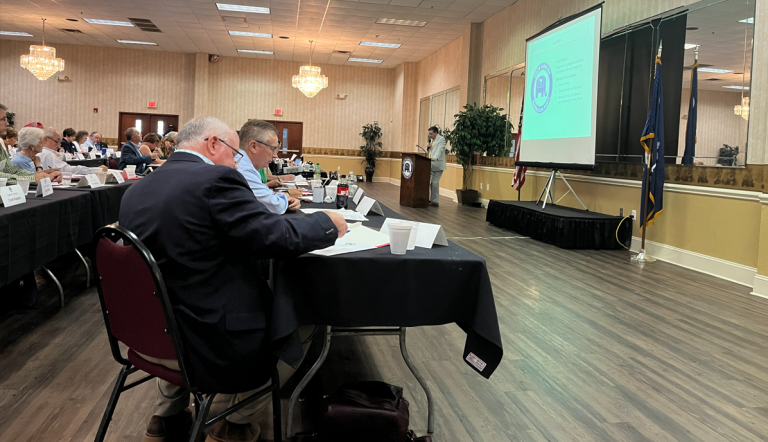
At the SCGOP Quarterly Executive Committee Meeting yesterday, Chairman Drew McKissick, explained a solution that he felt would be our best chance to finally get Closed Primaries. It would work like this:
- The first primary after the legislation was passed, everything would work as usual. The voter would choose whether they wanted to vote a Republican or a Democrat ballot.1
- Each primary voter would then be automatically enrolled in the party whose ballot they chose. If I, for instance, vote the Republican primary ballot, I am then automatically registered as a member of the Republican Party.
- Once registered, I am no longer allowed to vote in a Democrat Primary, UNLESS I change my party registration at least 45 days before the next primary date.
- A voter can change party whenever they please.

Besides this change for voters, part of the proposal would also apply to candidates. Anyone who wants to file to run for any office as a Republican, for instance, would have to have be a registered Republican and have voted in at least two of the last three Republican Primaries. Same would apply to Democrats and other parties.
Together, these provisions would insure that anyone who files to run as a Republican is truly a Republican. It also insures that only Republicans can vote in Republican primaries. The same applies to any political party registered in SC.2
Chairman McKissick, who has long supported Closed Primaries, emphasized to the Executive Committee that the chances of getting this passed greatly increase if all our county Republican Parties can come together in support of one bill encompassing these basic elements.
The fact that this initiative seems to be gaining momentum, is good news to the Saluda County GOP, as we recently voted to support a resolution asking for closed primaries.
That resolution was unanimously approved by the SCGOP at yesterday’s meeting.
This resolution should help answer a question many of our Saluda County voters have. What does the Saluda County Republican Party actually do? One of many things involves resolutions which sometimes emanate from the county party, up to the state level, and, sometimes, end up becoming law.
Read about the Power of Resolutions, and consider joining your county party. We need you! Your county needs you. Your state needs you. Your COUNTRY needs you!
- What Party ballot a voter selects is already party of the SC Election records, but there is no way the state, or anyone else, can know what candidates anyone votes for. That remains totally private. ↩︎
- South Carolina law does not limit primaries to only Republicans and Democrats; any certified political party can choose to hold a partisan primary. But, in practice, only the Republican and Democratic parties do so because they are the only two major parties that consistently run full slates of candidates and choose to nominate by primary rather than by convention ↩︎