Right now the direction of our country sits on a precarious edge. The balance of power in Washington is so delicate that a single Senate seat can determine whether the popular will of the American people is honored or blocked. In that environment, we cannot afford to sleepwalk into another six years of “business as usual” in the United States Senate.
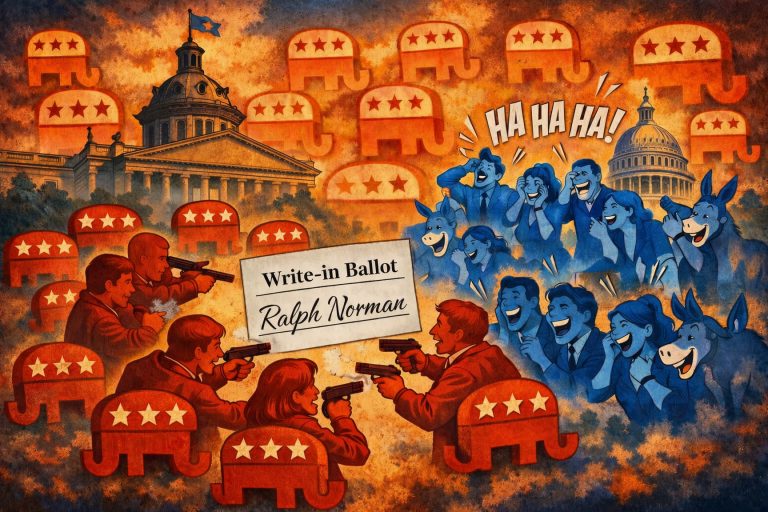
Today a slim minority in the Senate wields extraordinary power because of that chamber’s rules and traditions. The filibuster, unanimous consent, holds, judicial blue slips, and a web of procedural tricks allow a small group of senators to stop debate, block votes, and bottle up legislation that enjoys broad public support. Those rules are not sacred scripture; they are man‑made devices, and they have become a shield for entrenched interests against the demands of ordinary citizens. And even the two conservative senators from our very conservative South Carolina – Senators Graham and Scott – have made no visible effort to abolish or modify those rules.
If we are serious about restoring our country to what it was intended to be – government by the people – we must be equally serious about changing how the Senate itself operates.
That is why the choice of who holds a Senate seat from South Carolina is so critical right now. We need senators who will not simply “go along to get along,” but who will stand against ridiculous Senate rules and the suffocating traditions that prevent real reform. We need men and women who are willing to look at the filibuster and similar procedural tools and say, “If these rules are being used to silence the people, then the rules must change.”
This is not a small request; it is a demand for courage in a chamber that often rewards timidity and compliance.
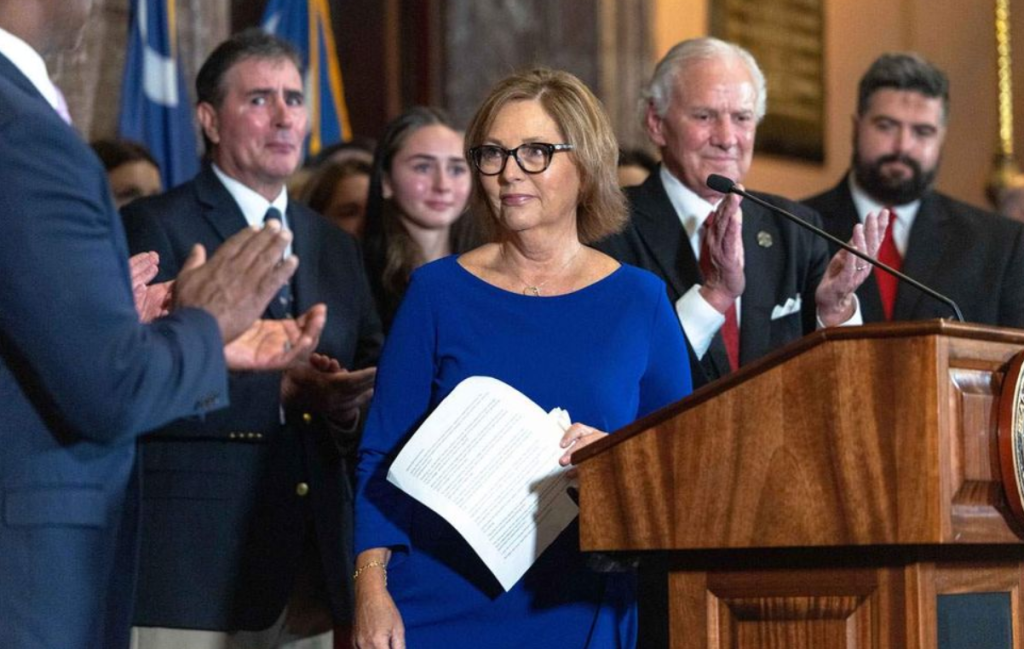
And this brings us to Darline Graham Nordone. The hard truth is that we have absolutely no idea how she would vote on anything if elected in her own right. We have no record of independent public service, no clear statements or commitments on the most important procedural questions, and no strong evidence that she would challenge the traditions that have made the institution so resistant to the people it is supposed to serve.
In the absence of that record, the safest assumption is that she would fall in line with Senate tradition, respect the old ways, and protect the very rules that have created our present gridlock.
When Darline was appointed to serve out her brother’s term, I was genuinely delighted. It seemed to be a humane and respectful way to honor a family’s grief and maintain continuity until the voters of South Carolina could make their own choice. I assumed, as did many others, that she would serve with dignity for the remainder of that term but would not seek the seat in her own right. That assumption mattered, because it preserved the expectation that the future of the seat – and of our role in shaping the country’s course – would be determined by a real, open contest in which the people could examine candidates’ records and choose a change‑oriented senator if they wished.
Everyone in South Carolina, even many who did not support Lindsey Graham’s continued service in the Senate, understands that Darline has suffered a deep and personal loss. We feel that loss with her. It is precisely because we recognize that grief that it will be hard for anyone to vote against her if she decides to run. The natural human impulse is to respond with sympathy and solidarity, to offer support to a sister whose life has been abruptly and painfully altered.
In church pews, neighborhood conversations, and party meetings, that same instinct will be very strong.
But we must be honest with ourselves: sympathy cannot be our guide when the stakes are this high. We must not succumb to emotion when so much hangs in the balance. The question before us is not whether Darline Graham is a good person or whether her family deserves our compassion; the question is whether we can reliably expect her to challenge the Senate’s obstructionist rules and stand against the traditions that have allowed a slim minority to thwart the popular will.
Until and unless she makes clear, specific commitments to do exactly that, the answer must be assumed to be no.
So, Darline, please don’t run. Not because you lack our respect or our prayers, but because your candidacy would almost certainly turn on emotion rather than on a clear, reform‑minded vision for the Senate.
South Carolina must have the freedom to choose a senator whose first loyalty is to the Constitution and the people, not to the unwritten rule that “this is how we’ve always done it” in Washington. We owe our state, and our country, a contest that is about the future of Senate power and procedure, not about our reluctance to say “no” in the face of your deep personal loss.
If you choose not to run, you honor both your brother’s memory and the voters’ right to decide the future of this seat without the heavy burden of your grief pulling them away from clear judgment. And if we, as voters, keep our heads and refuse to be swayed by emotion alone, we honor the gravity of the moment our country now faces.