Could President Trump’s efforts for Peace in the Middle East be taking root?
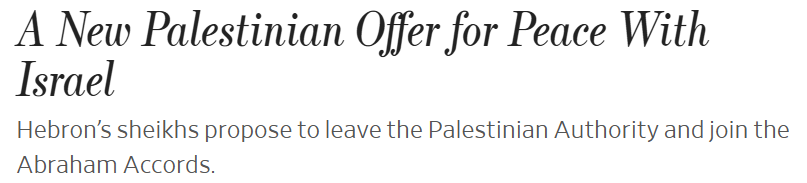
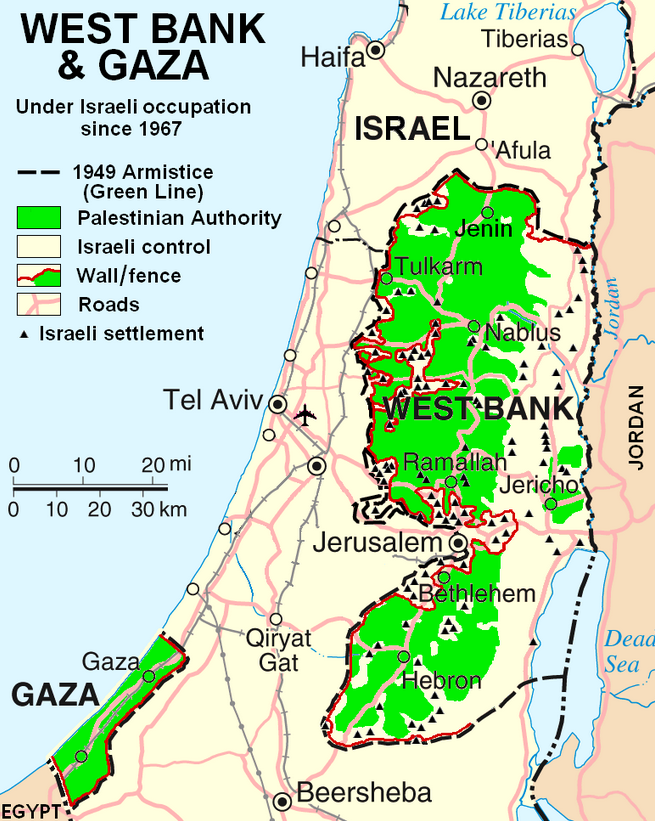
Five prominent Arab tribal leaders from Hebron in the West Bank have called for leaving the Palestinian Authority, recognizing Israel, and joining the Abraham Accords. These leaders sent a letter to Israel’s Economy Minister stating, in part:
“The Emirate of Hebron shall recognize the State of Israel as the nation state of the Jewish people, and the State of Israel shall recognize the Emirate of Hebron as the Representative of the Arab residents in the Hebron District.”
The letter also proposes the establishment of a “tribal emirate” in Hebron in exchange for recognition by Israel and a timetable to join the Abraham Accords. It denounces the violence and ongoing terrorism of the Palestinian Authority and a wish to abandon the idea of a separate Palestinian state in favor of economic cooperation with Israel.
After the sheikhs’ letter was publicized, many residents and extended family members held press conferences and issued statements distancing themselves from the initiative. They described it as the action of a few individuals, not the will of Hebron’s population.
While the five sheikhs claim to represent large clans, their move has sparked internal dissent, with some family members and other local leaders publicly opposing the plan. The backlash has included acts of intimidation, such as arson attacks, against those supporting the proposal.
Still, it must be remembered that the tribes of that part of the world have wielded great power for centuries, far pre-dating the organization of the Palestinian Authority. Though the recent letter has sparked controversy and the status-quo remains the same, this letter may indicate a sea-change in the thinking of many Arabs in the area.
Israel is the nation-state of the Jewish people, while others live there as full citizens in peace and security. Hebron, as a district or as an emirate, has a coherent history and leadership and, according to the letter, a vision for the future. A future that includes the State of Israel and the Jewish people in cooperation for the betterment of both people.
Everything about it bodes well for Hebron’s people to one day enter the Abraham Accords. Looking back at the 2000 “Vision for Peace,” the precursor to the Abraham Accords, President Donald Trump laid out an amazing vision for the region. He was explicit in denouncing the role of the Arab states in the decades-long war against Israel.
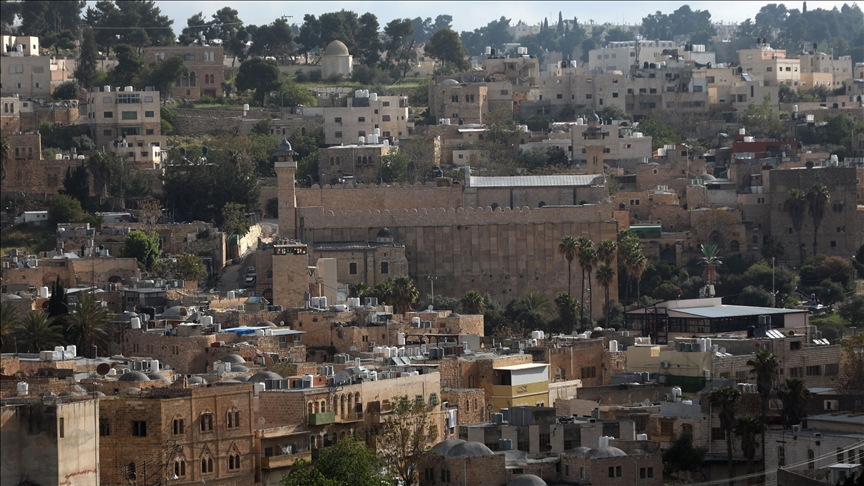
Although this recent offer from the five Hebron leaders to withdraw support from the Palestinian Authority and pursue direct relations with Israel has generated significant regional debate, it remains largely symbolic at this stage. The proposal has not led to any formal or practical changes in Hebron’s governance and is facing strong opposition from the PA, local tribes, and much of the population. The situation remains fluid, with the potential for further developments depending on both Israeli and local Palestinian responses.
The fact remains, however, that this offer by the five sheikhs is a significant gesture and an indication that public sentiment may be changing.
We lift our prayers, here in Saluda, for this seed to take root and grow.
Click the following headlines to read the full story…