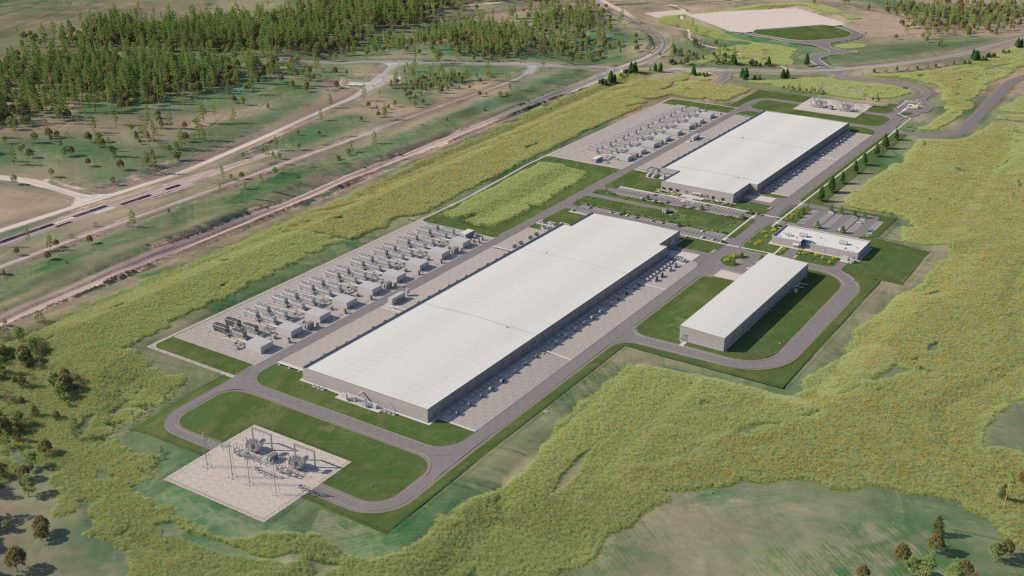
Companies that want to build data centers usually arrive with big promises – lots of investment, construction jobs, a boost for local businesses, and new tax money to fund services. In a county like Saluda, many of those promises would be hard to deliver in practice, while the risks to water, power, and farmland would be very real.
What data center companies usually promise
When a data center project is pitched, the sales pitch almost always includes the same set of benefits. Companies and their allies typically promise:
- Large capital investment: “Hundreds of millions” or even “a billion‑plus” dollars in buildings and equipment to grow the tax base.
- Construction surge: A wave of temporary construction and electrical jobs over several years, with workers filling up local motels, restaurants, and gas stations.
- High‑tech image: Marketing language about making the county part of the “AI future,” “innovation corridor,” or “digital infrastructure backbone,” which is supposed to attract more tech over time.
- New tax revenue: Assurances that, after some years of tax breaks, the county will collect strong revenue without raising property taxes on residents.
On paper, those promises can look attractive to a small rural county that wants growth but has a limited tax base.
How those promises fit Saluda’s reality
Saluda’s current reality makes it hard to capture some of the headline benefits, especially the construction boom and local business surge. Construction jobs and start‑up crews help a community most when there are multiple decent hotels, motels, and restaurants close to the site; in Saluda, lodging is minimal, and aging, and restaurant options are limited, so many workers would likely sleep and eat in neighboring counties instead.
That means much of the short‑term spending—hotel rooms, restaurant tabs, bar visits, retail shopping—would probably flow to Newberry, Greenwood, Aiken, or Lexington County rather than staying in Saluda. Saluda would still absorb the traffic, noise, and wear on local roads from heavy construction, while seeing only a fraction of the sales‑tax and business‑growth upside that’s usually advertised.
Likely benefits for Saluda
Even with those limits, there would still be some potential benefits, especially on paper.[1]
- Property‑tax base (eventually): A large facility adds taxable buildings and equipment once early tax‑break periods expire, which can help county revenue if incentives are not too generous.
- Some permanent jobs: A modern data center typically supports a relatively small number of ongoing jobs—far fewer than a factory—but they are often higher‑paying technical or maintenance roles.
- Construction and local contracts: Local contractors, suppliers, and some workers could get part of the construction work and occasional maintenance or landscaping contracts.
These gains are real but limited, especially compared to what is given up in land, water, and utility capacity.
Likely harms and hidden costs for Saluda
For an agricultural county, the biggest risks revolve around water, power, and how much public infrastructure would be quietly dedicated to one private facility.[1]
- Water pressure on farms and homes: Data centers can be heavy water users, especially if they rely on traditional cooling systems that run every day, all year. In a county where agriculture and rural homes already depend on shared water systems and local supplies, a big, constant industrial demand could tighten margins during droughts and dry spells, forcing tough choices about who gets priority.
- Power and rate impacts: A large data center can draw as much electricity as a small town, which often requires new substations, upgraded lines, and sometimes new generation. Even if the company gets tax deals and discounted rates, those infrastructure costs tend to get shifted onto regular ratepayers over time, meaning higher power bills for families and small farms.
- Very few permanent jobs: After construction, the promised long‑term jobs are modest, so the community may end up trading water, power capacity, and quiet farmland for a small number of positions that might not even go to existing residents.
- Land‑use change and noise: Farmland or timberland turned into a data center becomes a fenced industrial site with constant humming, backup generators, security lights, and truck traffic, permanently changing the character of that area of the county.
In a county that has built its identity and economy around agriculture and rural life, these harms weigh heavily against the narrower benefits.
Recommendation for Saluda residents
Given Saluda’s current situation—very limited hotels and restaurants, a water and utility system already crucial to farms and existing industry, and a small population that could easily be out‑voted on technical utility decisions—the usual data‑center promises do not line up well with local reality. Most of the short‑term economic boost would likely bypass Saluda, while the long‑term burdens on water, power, land, and quality of life would land squarely on Saluda’s residents and farmers.
Residents should not support a blanket ordinance that invites or pre‑approves data centers under these conditions. If a company wants to come later, it should first be required—through a specific, public agreement—to prove that water use is limited and transparent, that power upgrades will not raise local bills, that farmland will be protected, and that a meaningful share of both construction and permanent jobs will go to Saluda residents. Until those protections are spelled out in writing and enforceable, the safest, most realistic choice for Saluda is to say no to a pro‑data‑center ordinance.