Listen instead:
In America, voting is seen as an almost sacred duty — an act rooted in civic responsibility and love of country.
But let’s be honest. For many, the choice of which box to check isn’t always about careful research or policy study. Too often it is about family tradition, social identity, or habit.
I call this Legacy Voting — choosing a party because “that’s what we’ve always done.”
Legacy Voting can feel cozy and communaI. It can bond families and communities through decades of shared identity. But it can also come at a cost. When our votes are automatic, we teach our party leaders that there’s no cost to ignoring us. The truth is, parties pay closest attention to the voters they are worried about getting or keeping.
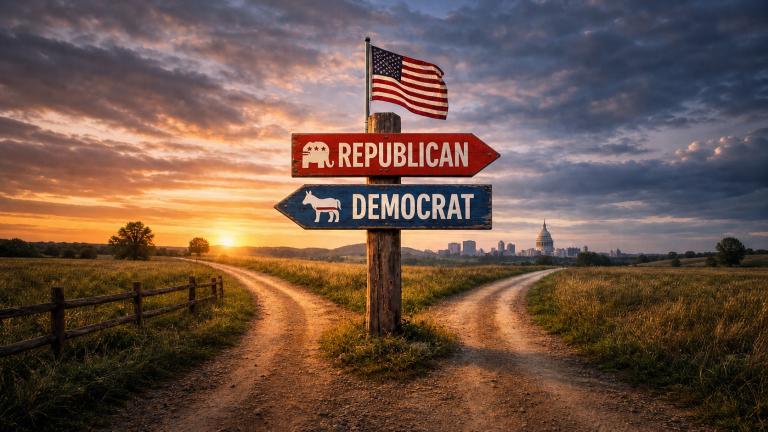
So, maybe it’s time to flip the script. Instead of seeing political parties as something we serve, let’s treat them as the tools they were meant to be — vehicles to advance our priorities, our convictions, our values.
How Legacy Voting works
Legacy Voting basically runs on two things: inertia and identity.
Consider my father’s family. He was the youngest of ten children who grew up in the small community of Lone Mountain, in Claiborne County, Tennessee. Claiborne County’s history is very similar to Saluda County’s – it was built, largely, by subsistence farmers, and is still largely rural and agricultural with a number of cattle farmers. It was already a hard life, but during Dad’s teen years, the county fell solidly into the grip of the Great Depression. And one thing is for sure, Franklin Delano Roosevelt and his New Deal made Democrats of them all! To them FDR not only saved the country, he saved Claiborne County! To this day, six generations later, the majority of Dad’s very large extended family are still Democrats.
In my Dad’s case, however, WWII intervened. He was a pilot, and was heavily involved dropping paratroopers in North Africa, Sicily, Normandy, and, later, Holland. He developed a deep respect for the Allied Commander, Dwight Eisenhower, who later ran for president as a Republican. I know for a fact that my Daddy not only voted for Eisenhower, but voted Republican in every presidential election for the rest of his life.
But he never called himself a Republican. He said he was a “Democrat” until the day he died.
Those emotional ties are powerful. They exist across communities. Many Black American families, for instance, trace their Democratic loyalties to the Civil Rights era — an understandable connection to a historic moment particular to them. Yet, many Black Democrats are now struggling with a party that has shifted away from many of their moral and social values.
One of my good friends is a Black Christian gentleman in his forties. We enjoy discussing politics with each other, and can go on for hours. More than once, he has told me he agrees with Republicans on almost every major issue — but he would never vote Republican. His loyalty to the Democrat party is absolute.
That is Legacy Voting in action.
These aren’t just stories—they are backed by research. Pew studies show that many voters stay loyal despite disagreeing with their party on big issues like immigration, abortion, or taxes. Party identification usually locks in early and it rarely budges.
The Danger? Exploitation
When a political party thinks a voting bloc is “in the bag,” they tend to ignore it. Why should they spend time, resources, and platform considerations on guaranteed votes when they can aim for a new group and expand the base? And, trust me, both parties are paying attention. They spend massive amounts of money monitoring their voters. You would be amazed at the data they are able to collect!
Political thinker, Chantal Mouffe, warns that a healthy democracy needs rigorous debate, not rigid tribes. Legacy Voting can turn elections into “us vs. them” rivalries, rather than policy comparisons. It also fuels inequality. Legacy Voting may well cause the most faithful Black and Hispanic voters to enable their own neglect. An example would be the Democrats shifting focus and resources to Illegal immigrants over longtime American residents.
My departure and Return
I am a different case in point. I have been a Republican most of my voting life, and am now Chairwoman of my County GOP. But for about fifteen-years, I stopped calling myself a Republican and voted for third party presidential candidates twice. It was not until Donald Trump came on the political scene – almost exactly articulating my own beliefs – that I returned to the Republican Party.
So, when I now say I’m proud to call myself a Republican again, it’s because the party returned to me and the traditional, wholesome, common-sense principles I believe in — no blind loyalty here! And if the day ever comes that another party better exemplifies my own values, I’ll have no hesitation to reevaluate my choice.
That’s what free and informed citizens do.
I am a fervent believer in bottom up, grassroots government. I am not a tool of my party. They are intended to be a tool for me. My Party helps me to put my most precious gift, my vote, in the right place, at the right time, to elect the right candidates. As a local political leader, the Party also serves to connect my efforts to those of other county leaders, magnifying our efforts across the state and across the country.
Be the Boss!
Policy-first voting is the antidote to Legacy Voting. It empowers you — the voter — to stay in charge.
When we start digging into issues that matter most to us, parties have to compete for our votes.
That competition:
- Keeps elected officials responsive
- Raises the level of debate from slogans to substance.
- Strengthens government by aligning it with real people’s priorities.
Your Political Party is not the boss of you unless you let them be!
How to Make the Switch
It’s tough—family traditions pull hard, and others may judge you harshly – even reject you for not toeing the party line. You can be open and bold about it, or quiet. Nobody but you knows what you do in the voting booth.1
The biggest challenge can be wading through all the rumors and sensationalism in the News and Social Media to determine exactly what issues you do care about the most.
With understandable concerns over the difficulty in getting fair and accurate information, I would suggest two highly non-partisan websites, Ballotpedia and Vote Smart for clear issue information and candidate comparisons. There is also a fascinating website called “I Side With” that contains a very interesting quiz. It is probably more in depth than any political quiz you have ever taken. It takes at least 20 minutes and has no gimmicks. It makes you think of issues in ways you never considered before.2 At the end, however, it will tell you what party you most closely align with, and during Presidential Election years, it will tell you which specific candidates come closer to your own views.
The Takeaway
Over the years, I have second-guessed myself many times over my two third-party presidential votes. One made no difference. The other, supposedly, assured the election of Bill Clinton.3 That is another story I will eventually write, but for the purpose of my point in this article, the Ross Perot candidacy taught the Republican Party two real lessons: The power of a candidate who truly connects with the average voter, and the futility of third parties in Presidential elections.
No one heard those messages more clearly than Donald Trump.
My parting message, is that we must each know our own power and use it. I have been learning mine, and I want you to learn yours. You have more political power than you think!
Meantime:
Vote with conviction—for the policies that you prefer. That is the very essence of “government by the people!”
Understand that your ballot is your voice, and your vote is your leverage.
So, use it fiercely — because the party only works for you when you remind it that YOU are the boss!
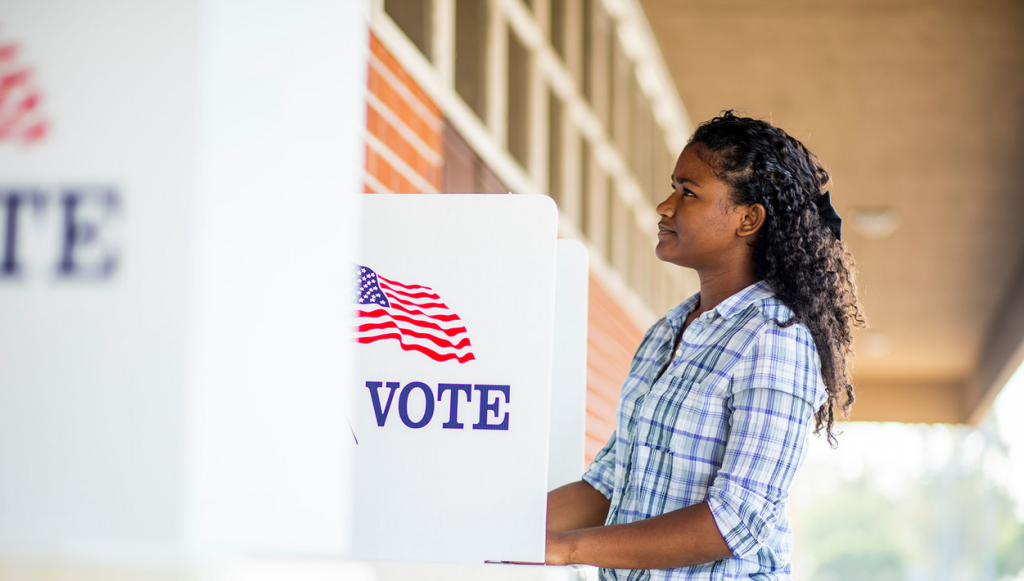
- Even your party does not know how you ultimately vote, but they are definitely aware of where they lose voters in general. If you have become disenchanted about certain policies of your party, others probably have too. That becomes a noticeable trend. ↩︎
- The quiz not only assesses how you feel about most issues, but also measures the priority of each issue to you. ↩︎
- Certainly, it was not my vote, alone, but the trend created by 19% of the total voters in that election ↩︎