For decades, America encouraged young people to believe that a four-year college degree was the only respectable path to success.
Skilled trades and manufacturing careers were too often treated as second-class choices. Students borrowed heavily for degrees that did not always lead to good jobs, while American factories struggled to find qualified technicians, engineers and skilled workers.
Businesses increasingly relied on foreign labor—or moved production overseas altogether. Between the disastrous de-industrialization of America and the inexplicable increase in HB1 Visas, the prospects for many young Americans have looked bleak.
President Trump’s new Foundry School initiative is a common-sense step toward reversing that damage.
Preparing Americans to build things again
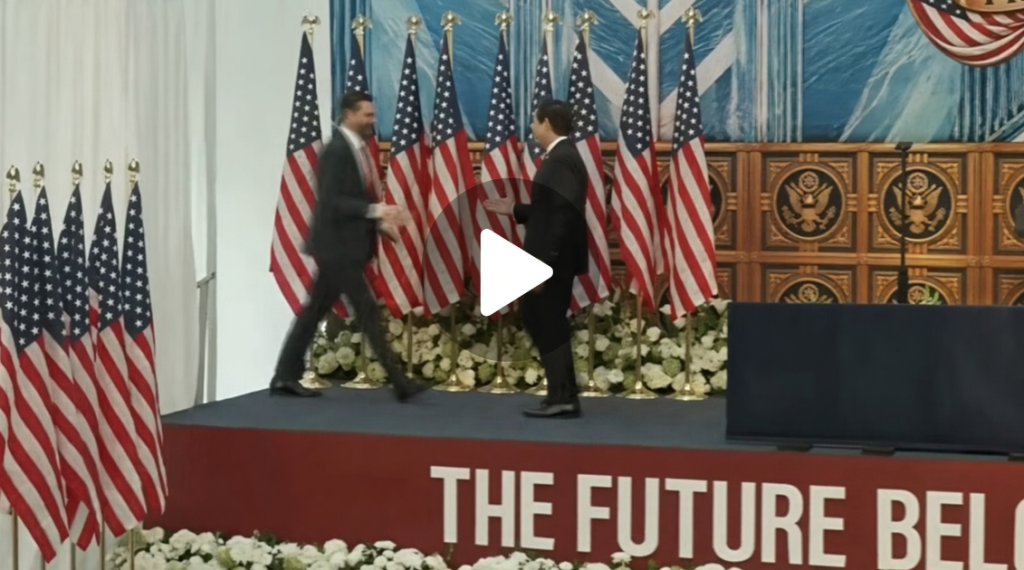
Launched by Vice President J.D. Vance and Secretary of State Marco Rubio, Foundry School will connect students with the people who actually build and operate modern manufacturing businesses.
The program begins with eight major universities:
- Stanford University
- Arizona State University
- Georgia Tech
- Ohio State University
- Penn State
- University of Kansas
- Vanderbilt University
- Washington University in St. Louis
Across those campuses, founders and business leaders will conduct 17 sessions covering modern factory design, advanced manufacturing, quality-control systems, digital production and the practical challenges of building and running a manufacturing company.
This is not another government program built around theory. Its strength is the direct involvement of employers and entrepreneurs who understand the skills American industry need.
The State Department describes Foundry School as part of the administration’s larger effort to rebuild America’s manufacturing base and strengthen the supply chains supporting semiconductors, artificial intelligence, energy, defense and other critical industries.
Reversing decades of bad policy
America did not lose its manufacturing strength by accident.
For decades, leaders in both parties accepted the idea that factories could be moved overseas while the United States became primarily a service economy. Schools reduced vocational education. Skilled trades were undervalued. Students were pushed toward expensive degrees whether or not those degrees matched their abilities or led to real employment.
The result was predictable: closed factories, weakened communities, growing dependence on foreign countries and a severe shortage of workers prepared for modern industrial jobs.
American manufacturers may need to fill an estimated 3.8 million positions by 2033. Those factories will require far more than assembly-line labor. They will need machinists, technicians, engineers, data specialists, maintenance experts, production managers and entrepreneurs.
We cannot rebuild American industry unless we also rebuild the American workforce.
Education Should Lead to Opportunity
Foundry School does not replace vocational schools, apprenticeships or technical colleges. It complements them by directing more talent toward advanced manufacturing and encouraging young entrepreneurs to build physical products—not just financial schemes, phone applications or social-media platforms.
It also challenges the outdated assumption that success must mean sitting behind a desk with a diploma on the wall.
There is dignity in building something useful. There is honor in mastering a difficult trade. And there is real opportunity in learning skills that employers desperately need.
Education should prepare students for productive, independent lives—not simply leave them with debt and a piece of paper.
Manufacturing is a national-security issue
Foundry School is also part of Pax Silica, an American-led partnership intended to strengthen critical industrial and technology supply chains among trusted nations.
The pandemic and growing tensions with China exposed the danger of depending on foreign countries for semiconductors, medicines, industrial materials and essential components. A nation that cannot manufacture what it needs cannot remain economically independent or militarily secure.
President Trump understands that tariffs, investment and new factories are only part of the answer. Those factories must have Americans capable of designing, operating and maintaining them. That makes workforce training more than an education issue. It is an economic-security and national-security necessity.
A welcome change in direction
Foundry School alone will not repair decades of deindustrialization, but it represents an important change in how Washington thinks.
Instead of telling every student to borrow money for a traditional degree, we should create more pathways into skilled, well-paying work. Instead of importing workers to fill jobs Americans were never trained to perform, we should train Americans. Instead of depending on foreign factories, we should restore our ability to make critical products here at home.
President Trump’s message is simple: America should once again be a nation that invents, builds and produces.
Foundry School is an encouraging step toward making that vision a reality—and restoring opportunity, purpose and pride in American work.
It is also one more reason to vote Republican in November. This innovative program is directly in support of the Trump/Republican determination to bring industry back home and help “Make America Great Again.”