Day one energy.
First bill signed.
No waiting around for “process.”
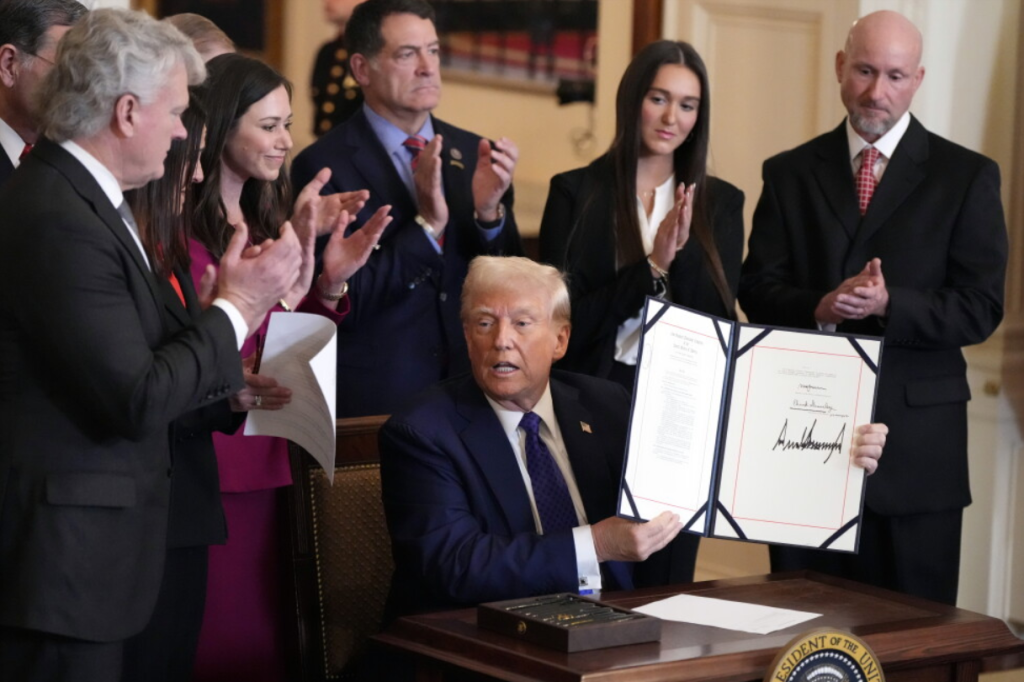
On January 29, 2025, President Trump put pen to paper on the Laken Riley Act and turned a campaign promise into federal law.
The law is named for Laken Riley, a Georgia nursing student whose murder became a gut punch for the country: a young American dead, and an illegal immigrant who should never have been free to roam. The point of the bill is simple. If you’re here illegally and you get arrested or charged for certain crimes, you don’t get to stroll back into the neighborhood while the system shrugs.
What does it actually do? Homeland Security has to issue a detainer and take custody of certain people who aren’t supposed to be here if they’re arrested for, charged with, convicted of, or admit to burglary, theft, larceny, shoplifting, assaulting a cop, or a crime that kills or badly injures someone.
Not “maybe later.” Not “after another chance.” Now.
That’s the punch. Before, Washington often treated lower-level offenses like a gray area. Wait for conviction. Wait for the next crime. Wait until somebody else pays the price. This law slams that door. An arrest for a covered crime is supposed to trigger immigration action immediately—not another disappearing act into the community.
It also hands states a real stick. If a state thinks the feds are slacking on detention and removal, and people get hurt or the state takes a measurable hit, it can go to court. In other words: no more “not our problem.”
That’s why this is a signature Trump accomplishment. He didn’t just talk about enforcement. He made it mandatory. He took the slogan off the rally stage and wrote it into the U.S. code: Americans shouldn’t eat the cost of failed detention.
And it wasn’t a lonely partisan stunt. The Senate passed it 64–35. The House passed the final version 263–156. Democrats crossed over because the issue wasn’t abstract anymore. Communities had seen enough.
The message of the Laken Riley Act is blunt: get arrested for one of these crimes, and immigration enforcement is supposed to move first—not last. By signing it as his first law back in office, Trump did what “The Trump Effect” always claims to do: cut the delay, keep the promise, and put American families ahead of bureaucratic excuses.