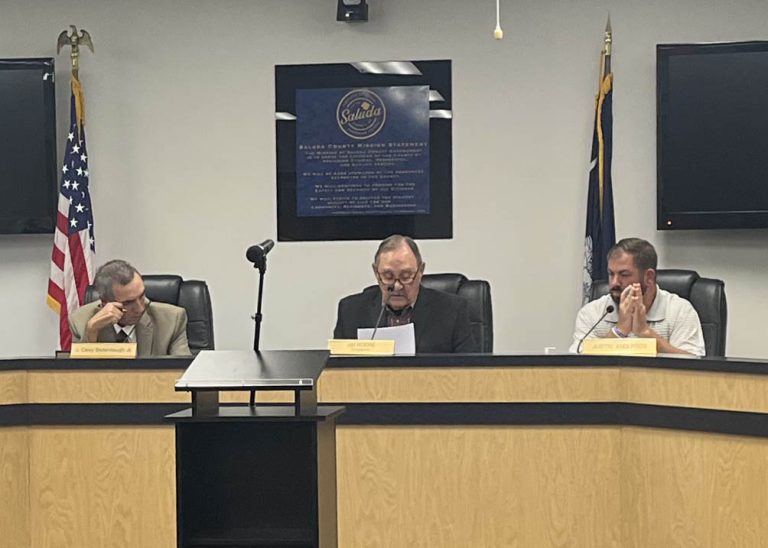
Opening Ceremonies
Good evening, and welcome everyone, and thank you for joining us tonight. My name is Greg Sander, and I serve as first vice chairman of the Saluda County Republican Party. One of our main missions as a county party is voter education. We are pleased to provide this opportunity for you to hear directly from your local candidates and to ask them the questions that matter most to you and your families.
We believe there is a huge untapped power among Republican voters in the grassroots, and that is why a strong county party is so important. We’re working in all of our precincts to bring together as many voices as we can in our quest for better government grounded in common sense, rooted in traditional values, and inspired by a deep love of country.
Thank you again for being here, for being an active part of our effort. A quick housekeeping note: if anyone needs a restroom, it is in the back behind me. We’re ready to go. We’re going to have Mr. Ben Ward do our invocation.
Let’s bow our heads.
Gracious Heavenly Father, we thank you for the opportunity to come to the throne of grace. We come with thanksgiving that we live in the land of the free and the home of the brave. And we ask that Your presence be felt among us. Give us the spirit of wisdom and discernment that we may understand what it is that You intend for us to do. Give us the strength to do it and the vision to see it to completion.
In Jesus’ name we pray. Amen.
Please stand for the Pledge of Allegiance.
I pledge allegiance to the flag of the United States of America and to the Republic for which it stands, one nation under God, indivisible, with liberty and justice for all.
Thank you.
We’re going to let Ms. Amy Potts, Chairman, speak.
Thank you all for coming. I hope you’ll find this time well spent. I hope you’ve all gotten your questions written down and turned in in the back, and I thank Ben Ward for going through those questions and prioritizing them for us.
Thank you, candidates, for coming. We have Bradley Gantt here, Andrew Johnson, Jim Moore, Ricky Bailey, and Katie Hall. You’ll notice an empty spot that was for Cal Forrest, but unfortunately he can’t be here. Fortunately, he can’t be here because he’s working really hard in another late day in the House passing amendments so that we can get a new redistricting map that is not based on race and that is constitutional, as our Supreme Court recently defined for us. So he’s out doing the work of the Lord, and he regrets that he can’t be here.
We will take all the questions for Cal, and I will, in some form, do an interview with him with all the questions that he would have been asked here tonight, and we will make that video available for you on our website and we’ll share it to other websites, Saluda Now, and other places as well.
It is my pleasure to introduce our moderator tonight. I first met Richard Peterson in January 2015 at the funeral of a beloved cousin with whom he had been friends. A few months later, our paths crossed again at my local VFW, where Richard was working with the Lexington GOP, planning a big event for the Trump campaign.
Years later, when I joined the Saluda County Historical Society, there he was again, and our mutual love of country through politics and history has made us fast friends. Richard brings decades of experience in Republican politics and community leadership. From 1988 to 1992, he served as Director of Marketing for the Republican National Committee under President George H. W. Bush, working with the colorful Lee Atwater and traveling across the country to recruit candidates.
He has long been active in the Lexington County Republican Party, serving as Western District Chair and as First Vice Chair under three county chairmen, working to strengthen Republican engagement in the grassroots.
Beyond party leadership, Richard is a past president and CEO of the Lake Murray Chamber of Commerce, where he promoted local businesses and regional economic development. He now serves on the 100 Years of Lake Murray Committee, helping to plan the 2027 Centennial Celebration.
As a member of the Saluda County Historical Society, he has a special interest in Saluda County’s connection to the Alamo and Doolittle Raiders, and he is currently writing a book on James Butler Bonham. I consider Richard a true Renaissance man and a fascinating friend. We are deeply grateful for his willingness to moderate tonight’s candidate Q&A. So let’s give him a warm Saluda welcome.
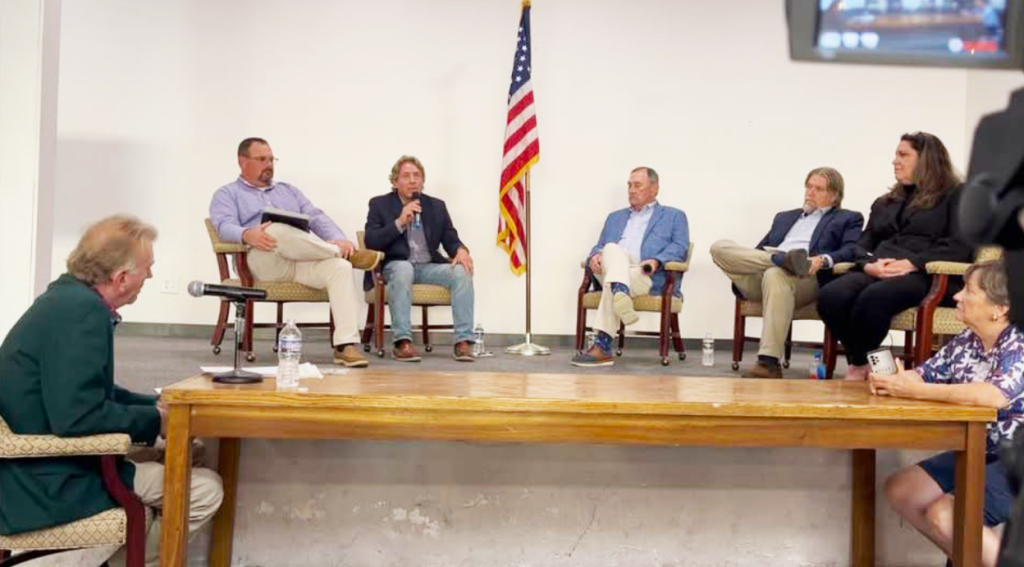
Questions for our Candidates
Moderator (Richard Peterson):
Thank you very much. That was a little over the top, but I appreciate it. I want to welcome everybody.
We’re going to go with a format where I will ask questions, and the questions will be answered with a 60‑second time limit. After that, if there is to be a rebuttal, the opposite candidate will have 30 seconds to rebut.
I will start out with general questions for all the candidates. The first question is:
Question: Where are you currently employed, and will this new elected position give you the time to devote to your duties?
Gantt: I am currently employed with Michelin and I work straight day shift, so I’ll be available.
Johnson: I’ve been employed with the South Carolina Department of Social Services until May 6, when I resigned. So I’m currently ready to go to work for Saluda County.
Moore: I’m retired—retired twice—from the Navy and from teaching school, and I’ve already been putting in a lot of time, so it does not pose a problem.
Bailey: I’m currently employed by Bailey and Son Music Company, Incorporated, located here in Saluda, South Carolina, and also Bailey Rental Properties. I’m flexible, been working close to 30 years. My lovely wife helps me, so I’m very flexible and I can get to everything I need to get to.
Hall: I am currently retired. I was a teacher’s aide for children with extreme special needs, and now I guess you could say my job is like every other wife out there—taking care of my family.
Question (to Jim Moore and Andrew Johnson): As you know, Saluda County is facing a $350,000 annual loss in boat tax revenue due to the new state law. Do you have any ideas on how Saluda County can compensate for that lost revenue, and will that help offset shortfalls while still delivering the raises that have been promised to EMS and law enforcement?
Johnson: With the projected shortfall from loss of revenues, I think what that means for Saluda County is that we have to look hard at the budget. The budget process is underway now. There will be a budget workshop on May 26, as I understand it. I think what that means for us is we’ve got to look hard at those numbers, make sure that what we have in the budget for approval is based on must‑have items, not nice‑to‑have items.
Moore: Any time you lose revenue, you’ve got two ways to make it up: you can raise taxes or you can cut services. That’s what we have to do—one or the other. We are currently working on the budget, and like Andrew said, there’s a budget workshop on the 26th. Will we be able to give raises to employees? I don’t know yet; the budget process is still ongoing. I do know that by the time we get to third reading, the budget will be balanced. When we do the workshop, we’ll hear from department heads as to what they can do. There are only two ways you deal with a shortage of revenue: raise taxes or cut services, and neither is very pleasant.
Question (to Jim Moore and Andrew Johnson): Is there one big new idea that you would like to bring this cycle to council if you’re elected or reelected?
Moore: A new idea… we’ve been working on communications. I do listen to people, and our communications have been bad. We’re working on that. I spoke with someone today about putting some of our information on YouTube. We had already looked at putting our meetings on YouTube, and that was going to be cost‑prohibitive, but perhaps we can put a podcast or something similar. That’s the latest thing I’m looking at.
Johnson: We’re thinking a lot about communication because I think the greatest effort needs to be put toward informing the public of what the government’s doing and letting the public have a say in what government’s doing. That would involve revamping the website quite a bit, putting more information out there on the website—such as budget worksheets—so people could just go take a look. There’s a lot of work that needs to be done when it comes to communicating what council’s doing to the public, along with other things like continuing the revitalization of the downtown area. I’d love to see that happen, and communication would be the primary focus.
Question (general): As data centers, large developments, and an influx of people move into South Carolina over the next years, what will you do to protect our way of life and the rural nature of Saluda County? How will you prioritize quality growth over quantity?
Gantt: I think we need to protect rural Saluda. We do need responsible growth and to keep the data centers out—just keep our rural county the way it is.
Johnson: I think there are limitations that surround the ownership of private property. As Chairman Morris said, what people do with private property is out of the control of council. What we can do is pursue zoning, which will create some statutory limitations on where these kinds of businesses could be. We know they drain the water supply, they use a lot of power, they’re cropping up everywhere, and they’re definitely at odds with preserving our agricultural lifestyle. I think educating the public as to the dangers of data centers is huge, because I hear so often, “What’s so bad about it?” You have to explain that this is not in the interest of a community, especially when surrounding counties are actively trying to bring data centers in. It would be nice if we were uniquely different and said no.
Moore: Currently we’re working on the comprehensive plan. We are redoing the land use portion. That’s the first step; the comprehensive plan is the first step toward zoning. We started that process over a year ago. We’ve just got the maps; I’m waiting on the Planning Commission to approve the revised land use section of the comprehensive plan, and then we’ll be able to go on to second reading and put that out. Once the comprehensive plan is in place, then we can look at zoning. Our goal throughout the county is to preserve our agricultural heritage, and every area in the county would be zoned for agriculture.
Bailey: For Saluda County, if you look around, we don’t have a lot of industry coming. We have to make a decision: are we going to be a bedroom community, or are we going to entertain business to come? You’ve got to start focusing, because Lexington County is coming this way. If we focus on what we can do, maybe we can keep the bad out, but we need to be educated on what’s good and what’s bad. Everybody wants growth until it comes next door; then nobody wants it. You want your neighbor to have to deal with it. We could put things in place, like zoning, and educate everybody about the pros and cons.
Hall: On the House level, I believe that we are losing our small farms due to the regulations they have to deal with daily. They end up dealing with more paperwork than time in the field. I will be the first to tell you I am not a fan of data centers. The main pushers of data centers are the electric companies.
Question: One candidate stated in a campaign ad that he would like to keep Saluda “moving forward.” The question many have is: moving forward into what? What is your vision for Saluda County, and do you believe that vision lines up with that of the people you’ll be representing?
Gantt: My personal vision for the county is a responsible approach and responsible leadership. I would like to listen to everybody’s opinion and do what’s best for the county.
Johnson: Keeping Saluda moving forward means a handful of things. It means smart growth—that’s making sure a subdivision doesn’t pop up next to your farm. Smart growth requires planning. Keeping Saluda moving forward requires not only rooftops but also people spending money. When you look at the GDP of Saluda over the last four to six years, it’s improved, but primarily from our agriculture and food processing—Titan Farms, Amick Farms. Those industries are where we really need to grease the wheels. That’s going to keep Saluda moving forward.
The industrial park on Industrial Drive was a very necessary development. We need that. But that’s only one component. What the existing council has done has been a good thing—getting us ready for that next retail establishment that needs a place that’s ready for them to open shop. You can’t leave out agriculture and food processing, and other things that have been large drivers over the last six years.
Moore: Saluda County has a rural heritage. If you look at our logo, it says “timeless heritage,” and we rely on that. We are an agricultural, rural area. People like that; that’s why they come here. They don’t want to be in a city. But you have to have some growth. We have to provide some businesses for our children to work in here. If there are no jobs, they have to go somewhere else. We don’t want to be a bedroom community. We have put in a road, water, and sewer; we prepared Commerce Park for business—that’s the first step. Now we’ll have to find a business to come in. Out in the county, we need to preserve our rural heritage.
Bailey: Going back to what I said earlier about being a bedroom community—the lake property is growing, and that is something we can capitalize on, but we also have to have protection so it doesn’t exceed our infrastructure. We’ve got to be more proactive about that. The county has been working on some things, like a capital projects sales tax, that would help with growth. Being a bigger community sometimes isn’t bad, because you’ve got to have industry to help bring down property taxes. We have to get money from somewhere. It’s either going to be houses being built, or industry coming in to help offset the cost, and we have to work on a balance between the two.
Candidate: For me, I would like to see a beef processing plant right here. Our farmers are having to go out of state to have things processed. If it’s born here and grown here, why is it not harvested here? I think that’s where we start. Thank goodness for Titan Farms and other major employers in Saluda County.
Question (to Andrew Johnson): What do you mean by “collaborative style governing” or “collaborative leadership”?
Johnson: Collaborative leadership to me means if I’m the chairman, I’m not necessarily the boss. I may have to reach out and talk to people who are smarter than me on economics, finance, and how we do things. I want to collaborate. If I’m the smartest person in the room, I’m in the wrong room. I need a room full of people who know how to get things done. I want to collaborate with them and work together with the rest of the council and other leaders in the county. That’s how you arrive at the very best decisions—when a bunch of eyes are looking at a problem.
Question (to Jim Moore): Why is the county paying the county attorney to send certified letters to citizens?
Moore: Any time you send a certified letter, that’s so you can ensure that it has been delivered and that the person knows they’ve received it.
Question (to Brandley Gantt and Ricky Bailey): You’re first‑time candidates with no prior elected experience. What specific skills, background, or experiences do you bring that will help you review budgets, make policy decisions, and represent District 3 effectively?
Bailey: Like I said earlier, I work for Bailey and Son Music Company. The company was started in 1978 by my father. I took over in 1994. I went to USC and graduated with a degree in retailing, and I took over the business. I’ve been making decisions that affect our business ever since. We’re close to 50 years in business, and for about 35 of those I’ve had my hands on day‑to‑day activities—from making payroll, to paying taxes, to balancing a budget, and going out and talking with people.
I’ve developed those skills through business and through being involved in our church; we went through a process of discernment and I was one of the ones that led that process. I’m easy to get along with, I like working with people, and I’m business savvy. That’s what I bring to the table.
Candidate: I’ve worked in manufacturing for 25 years now. I started on the production floor and worked my way up through quality assurance. I go to other plants around North America to check their quality. I organize and hold meetings with plant management, telling them what they need to do to make their quality better. I’ve been a coach at the rec department for over 10 years, leading our youth and trying to make them better. And a wise man once said, “An expert at anything was always a beginner.” You don’t begin as an expert.
Question (to the same two candidates): Politicians regularly declare transparency while campaigning, but are often only seen at holidays or special events. How will you keep our district updated with issues?
Candidate: Social media—that’s the biggest thing going right now. You can share information there. I’m active in the school system and the rec department. You can see me around town anywhere. Feel free to ask me. I’m an open book.
Candidate: I actually had a conversation today with a young lady involved with the VFW. Part of our district is down on the lake side, and I had always been told there were eight houses in that community. There are 67 houses. I’ve already tried to make plans to use the VFW to talk to those people and see what their concerns are.
I’ve also mentioned to the Saluda County GOP that we need to find two more places to hold meetings. I want to come out at least once a month. The district is big; you can’t have one meeting at the traffic circle and expect people from the golf course area to come, or people from Ridge Spring and Richland Creek to come over there. So I’m currently trying to find places to have meetings once a month, and divide the district into three areas and try to get to those three areas each quarter. I would also like for the County Council chairman, whoever that may be, to go with me. I think it’s important for two of us to be there to hear the concerns and see the issues people are facing.
Question (to Katie Hall): During your campaign, you have expressed dissatisfaction with the lack of educational requirements for our county probate judges. What requirements do you think the General Assembly should put in place for probate judges?
Katie Hall: For probate judge, I believe you need to at least be a paralegal, so that you have some training in the law. Probate holds a lot of power, and I don’t think everybody quite understands that. They have the ability to do some pretty scary things.
Question (to Andrew Johnson): Have you ever gone to the county office and examined the books for your assessment of actual spending?
Andrew Johnson: I have called the office and asked for budget worksheets, and I expect I’ll get those, but no, I don’t think I’ve done exactly what you’re asking.
Follow‑up: Can you give a specific instance of waste or poor decision‑making by council?
Andrew Johnson: I think the way council runs a budget is kind of like inside baseball. There’s a lot that’s apparent if you’re on the inside, but if you’re on the outside looking in, it’s almost a mystery. At a previous forum, someone asked about a forensic audit. I think both Jim and I said no, we don’t need that. When I thought about it, I realized the questioner may have meant a performance audit.
When we look at these budgets, I think the best thing we could do is have an outside third party, familiar with government operations, look at what’s been budgeted in the context of a performance audit and identify what’s needed and what’s not needed. In the chairman’s defense, when people present him with a budget, he may or may not know exactly where to cut. We would need a third party to make those recommendations. No one, as a challenger, would have the inside information that members of council have.
Question (to Jim Moore): Why didn’t you or any of the other four councilmen, or Will Williams of Western South Carolina, suggest getting an assessment of fair market value before selling a four‑acre parcel with water, sewer, and frontage on Highway 178 for $15,000? How can you make sure this does not happen again?
Jim Moore: All I can say is it didn’t occur to us. Should we have done that? In retrospect, yes, I think it’s a good idea. We’ll probably have some sort of resolution or policy statement that says in the future we will get some kind of assessment of fair market value. We made a mistake there. Can we admit it and do better? Yes, we can and we will.
Follow‑up: Are you looking at implementing that process so it’s not recurring?
Jim Moore: Yes.
Question (to Brandon Gantt and Ricky Bailey): What do you see as the top one or two concerns for residents of District 3 in Saluda County right now, and how would you work to address them?
Candidate: The biggest concern I’ve heard, talking with people now, is they feel like they’re being left out. They don’t know what’s going on. I’ve tried to explain that when council has a first reading of an ordinance, that’s letting the cat out of the bag, so to speak. It is your job as a citizen—this is a partnership. If you elect one of us to serve you, we would like for you to call and let us know if there’s something you don’t like that we’re talking about or thinking about doing.
It’s a partnership. I’ll be representing the people, and what the majority says is the way I would vote. Transparency has been the biggest thing I’ve heard throughout the county, and I agree.
Candidate: I’ve heard the same thing, and that’s what I will work for—getting the public more involved, getting more people to show up to meetings, and being their voice.
Question (to both candidates): How would you handle a situation where your personal opinion differs from the majority of the residents in your district?
Gantt: Simple. I go with the majority of my district.
Bailey: I would always ask the county residents.
Question (to Andrew Johnson): You stated the chairman’s job is part‑time and emphasized that many meetings can be attended remotely or delegated. Given that you have zero prior experience in county government, how would you know which meetings are critical versus delegable?
Johnson: I do have one correction. I have served on the CTC, or roads board, for Richland County in the past, so I have a good feel for how that part of government works. The Richland County Roads Board operates a lot like Saluda’s, except I got a lot more calls from Richland County residents.
In state government, I get more meeting requests than I can possibly attend. The way we’ve adapted is to have a lot of virtual meetings. That’s actually the primary method now—using Microsoft Teams. The council and chairman have hired a full‑time administrator, and I have to believe that helps with many of the duties the chairman used to feel he had to do. We have that resource and asset; we should use it. Face‑to‑face meetings are not always necessary, and I have no concerns about using virtual tools.
Question (to Andrew Johnson): It is public record that your law license was suspended for one year in 2007 by the South Carolina Supreme Court. Can you expand on that and give some transparency?
Johnson: I thought you might ask how we were going to save money in the budget, but you’re asking about something that was 20 years ago. I’ll try to recall. I’ve been a lawyer for 28 years. In that time, you’ll see some really interesting and some weird cases. I had some clients whom I suspected were breaking the law, so I reported the situation to the South Carolina Bar and asked for an investigation, knowing there would be an interim suspension during the investigation period.
At the end of the Bar investigation, my clients were referred for criminal prosecution. My instincts were right—they had been breaking the law. At the end of that, I was reinstated as a member of the Bar in good standing. After that, I went on to become Assistant Attorney General for this state. I went on to become the Saluda County lawyer charged with prosecuting child abuse, and my Department of Defense security clearance was renewed over and over again. None of those folks ever asked me about that because it’s a matter of record for anyone to read.
Question (to Katie Hall): You’ve emphasized fixing roads and bridges properly instead of temporary band‑aids. What specific funding mechanisms or legislative changes would you pursue in the House to prioritize long‑term repairs in District 39?
Katie Hall: When I’ve looked at the budget, we have a lot of pork. If we took that pork out of the budget, then we would have the ability to repave every two‑lane road in the state of South Carolina in seven years or less.
Question: What legislation would you propose to support family farms and preserve Saluda’s rural character?
Hall: Immediately I’m going to go after the 87,000 regulations that our farmers have to deal with on a daily basis. Not only do they deal with state regulations, but they also deal with federal regulations. Each one of those regulations they have to fill out paperwork for comes at the cost of a dollar. They’re being nickel‑and‑dimed to bits and pieces. My first priority is eliminating as many of those regulations as I possibly can. That will help with instant relief.
Question (to all candidates): As far as data centers go, would you support legislation that any data centers, if approved in the county, would have to supply their own electricity and not cut off the electricity supply to the county?
Gantt: Yes.
Johnson: Saying they would have to supply their own electricity feels like I’m giving in, and I would rather say no, period, to data centers. There would be no circumstance where I’d want to allow them even if they supplied their own electricity. I would still say no.
Moore: Would I support legislation? Yes, I would.
Bailey: It would be a yes for me.
Hall: I would try to leave that up to the counties, but not only would they have to supply their own water and electricity, they would also have to supply a barrier for the noise—the constant hum that keeps going.
Question (to Katie Hall): You called for a new “report card” for budgets to protect taxpayer dollars. What are some current examples of wasteful spending or pet projects in South Carolina’s budget that you would target for cuts?
Katie Hall: You’ve got private entities receiving large portions of money. It’s their stuff—why is government paying for private things, like certain arts projects in Charleston that go against the religious beliefs many of us in District 39 hold?
Question: You have stated that life begins at conception and praised the heartbeat bill, but criticized its loopholes—no required police report or DNA test for rape or incest. How would you work to close those loopholes?
Hall: I would work to close that loophole. If someone is having that type of medical issue, they need to supply a police report. That way, when the procedure is done, they can use the DNA to find out who the perpetrator is, because unfortunately a lot of times with rape, you do not know who the person was. If that’s the loophole that’s there for you to have that procedure, I need to be able to know that that bad person is coming off the street.
Closing Statements
Moderator: We are to the point where we’ll get a summation from each of the candidates on what you feel the state of the county or your district is, and your overall philosophy on the direction we’re headed.
Bradley Gantt: I think the overall state of the county is good. We’re heading in the right direction, but we need to keep moving forward. We need responsible growth, responsible leadership, and to keep moving forward.
Andrew Johnson: I’ll just say quickly, I’m Andrew Johnson. I’ve lived in Saluda County for about 22 years with my lovely wife Jeannie, who is with me about halfway back [in the audience]. We’ve raised four children here together. We live on Mount Willing Road. I do a little farming—cows are primary. I’ve focused on keeping Saluda rural, on transparency in government, and on making wise financial decisions. I think we need to avoid borrowing too much and live within our means. That’s what I’ve harped on the entire campaign, and that’s where I’m at now.
Jim Moore: I’ve been in Saluda County for 30 years. I’ve served the people of Saluda County for the past 30 years as a school teacher, a Sunday school teacher for adults and youth. I’ve served on the school board and on the board of deacons in my church. I’ve just been elected commander of Post 65 of the American Legion, and I’ve spent the last four years serving as your chairman.
I believe we’re on the right track with growth. I believe that we need to maintain our rural nature. Saluda has trees, chickens, and cows—that’s our big thing, that’s our industry. Can we get something else? Sure. Will we try? Certainly. But we still have to maintain that rural nature of our county. That’s what people want.
We’ve talked about high‑density housing out in the county. No. That’s what zoning is for—zoning is to say, look, if you’re out in the county, you need to have low‑density housing, meaning an acre or more for your property. We don’t want the developments that are in Lexington County where the houses are 20 feet apart. We don’t want that in Saluda County. People have said that over and over. Do we want growth? Yes. Do we want industry? Certainly. We have to build our tax base. We need some relief for the property owners in Saluda County who bear the burden of all the services provided.
We have the best small EMS service in the state, recognized by the state. We need to maintain that. Do we need more for our deputies and our sheriff? Yes, we do. We’re always growing. Right now, we have a bunch of computers to put in patrol cars; it’s just a matter of getting that state‑of‑the‑art equipment installed.
Ricky Bailey: I’ve lived in Saluda County for 48 years. My wife and I have raised three lovely children. All three went to school here and graduated here. Two went on to college and graduated, and one of our daughters is still working on her PhD in chemistry—she gets her smarts from her mother.
The biggest thing I have seen is that we’re trying to play catch‑up and we’re worried about what’s going on right now—what we need to fix today. We’ve got to start putting thought into planning 10 or 12 years down the road. When we start building some of these buildings and facilities people want, we’ve got to make sure they’re multifunctional and can be used for something else, even if we don’t use them that way today. Think about what it’s going to be 10 years down the road. We need to start looking at it from a business sense, and that’s what I’d like to bring to the table.
As far as keeping the county rural, I agree. I don’t like subdivisions. I’m in an area where I don’t have many subdivisions, but like most of us I’ve got some land around me. Like I said before, everybody wants growth, but nobody wants it next door. We’ve just got to make sure we’re respectful to everybody around us, understand what they want, and try to keep it that way. At the same time, we do have to grow.
Katie Hall: I’ve been in Saluda County since 2010, and for 14 years I’ve lived at the exact same address. For me, one of the main things I’m missing is my voice. I feel like I do not have a voice in Columbia at all. Because of that, I have made it my mission to give everybody their voice back.
I will be at every county council meeting once a month in the evening so you can come and talk to me and we can have that dialogue. My phone stays on 24/7. I have scared people by answering the phone at 2:30 in the morning when they’ve called, and that conversation has gone on until 7:45 in the morning and then I’ve gone on with my day.
This seat is not about me. I don’t hold the seat—you do. The people of District 39 hold the seat. You call the shots. You tell me what you want. You tell me what you don’t want. That is how I vote. That is how I fight. And I won’t let go. I won’t quit.
Moderator: Cal Forrest is not here, and there’s a large stack of questions for him, but of course he’s not here to answer. Is there anybody else in the general public who has any questions you didn’t see answered that you’d like to direct to the candidates?
Amy Potts: I actually got some questions from Ruth by text. Do we have time for those?
Moderator: If we could.
Richard Peterson: While she’s looking for that—sorry to interrupt—but community involvement, what y’all are doing tonight here, is the heartbeat of any county and city in South Carolina. The more you get involved, the more you stay involved, and the more you ask friends and neighbors to come with you to meetings like this, that’s the kind of energy we need. There are a lot of people who are not aware of what’s available to them. It’s up to each one of you to think about people in your social circle who you can invite to events like this.
Y’all have the greatest spread of food I’ve ever seen. There’s no way everybody’s going to be able to eat it all. At the very least, they could get some groceries out of the deal!
Ruth Padgett (asked of all candidates): Where do you get your groceries?
Gantt: We get ours at Food Lion.
Johnson: We get ours at Food Lion too, but you know we have like 30 Dollar Generals in Saluda now, so you can also get groceries at Dollar General—and that’s hurt our Food Lion.
Moore: I don’t get the groceries—Merry does. The boss gets them at Food Lion, Publix, Greenwood, or Lexington—wherever her heart takes her. All I do, as you can tell, is eat them.
Bailey: We shop at Food Lion and Walmart and Dollar General.
Hall: I shop Food Lion. My meat comes from A&J Cattle Company, and most of my produce in the summer comes from small local farmers, because I can everything.
Moore: I think what she’s getting at is why we don’t have another grocery store in Saluda. That’s a question that’s been asked a lot of times. The reason is we have one major grocery store, but we also have several Hispanic grocery stores, and we have—how many did you say?—31 Dollar Generals. We don’t have enough rooftops to support another grocery store. It’s business.
Moderator: Is there a farmers market here where people can get fresh produce?
Greg Sander: There’s a farmers market in Ridge Spring—starting in June. And there is one right down here going out of town on 121. It’s not an official farmers market; it’s a gentleman who sets up in the summertime to sell produce. There’s also someone who sets up at the 7‑Eleven and Crouch Hardware to sell produce. I don’t know where he gets it, but he sells it.
Closing remarks
Speaker: I thank you all for coming. I hope you think the questions were well‑researched and well‑answered. We tried to look at all the statements that the candidates have been making online and on video and drill down more on some general statements and promises they have made. I hope this has been worthwhile for you.
I also want to thank very much all the people from the Saluda County Republican Party who helped with this. We are really working hard to be a relevant party in Saluda County, particularly with voter education and candidate recruitment.
The party is made up of our representatives from each precinct, and we have only two of our 13 precincts that are not organized or don’t have representation—that’s Centennial Precinct and Richmond Precinct. If you’ll be watching our website, www.saludagop.org, we will be talking about the next reorganization of our party, which will be happening this coming spring in March. That is an opportunity for you to come and join together with some really good conservative workers who care a lot about our county, our churches, our families, and our country.
We hope that you will come and join us through your precinct, and we’ll make sure you have the information you need so you can participate. I thank all of you for coming, and I thank all you candidates—not just for coming, but for stepping up to run. A lot of people complain; very few people step up to do the job, and I commend each and every one of you. You are all a credit to Saluda County.
I thank you, and I thank all of you for caring.
Good night. Thank you.
Eat some food!