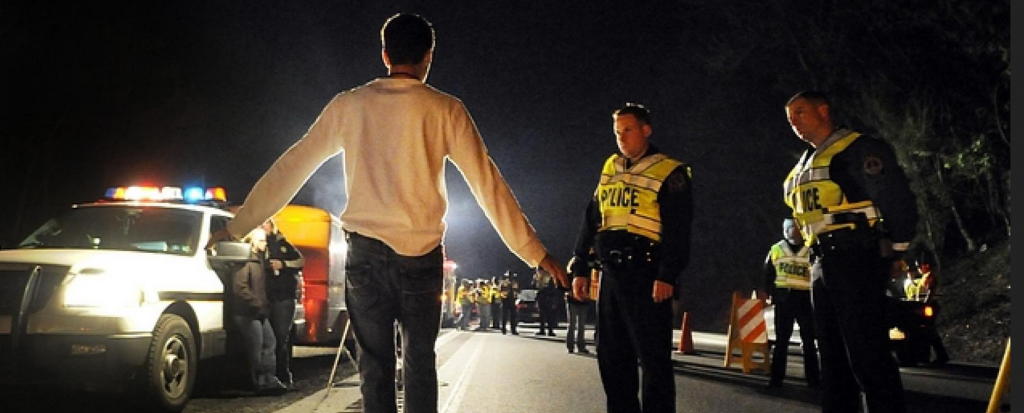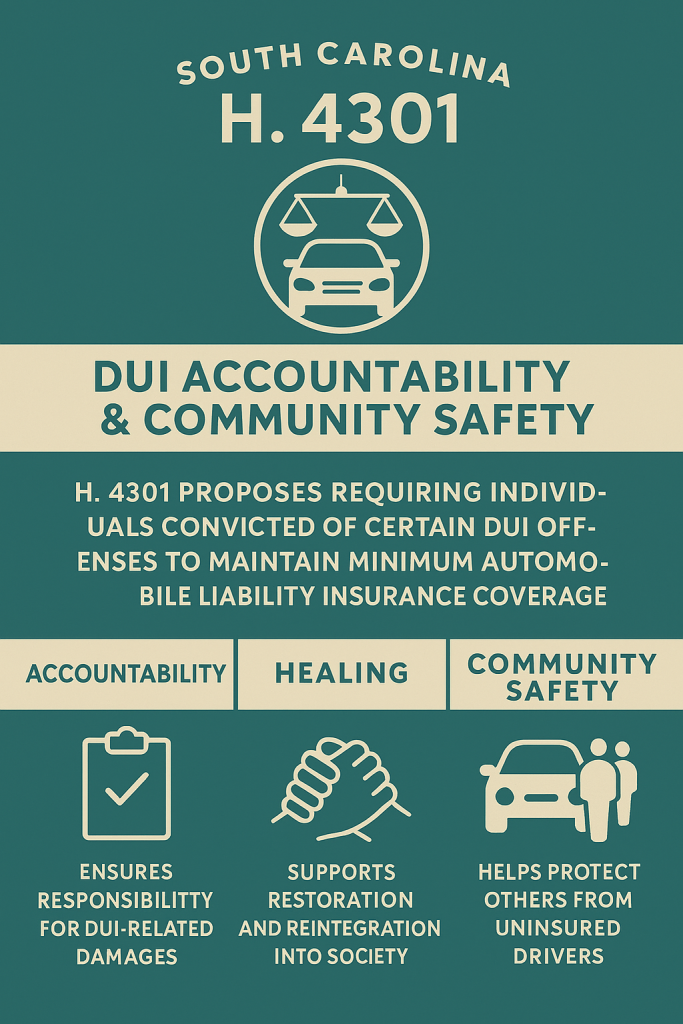
H. 4301 proposes adding Section 56-5-2956 to the South Carolina Code of Laws. Introduced by Reps. White, G.M. Smith, McCravy, & Kilmartin, it would require individuals convicted of certain DUI offenses—driving under the influence of alcohol or drugs—to carry minimum automobile liability insurance coverage. This bill is about about ensuring that those who’ve been convicted of impaired driving maintain financial accountability if they return to the road.
How It Affects Your Community
✅ Potential Benefits
- Safer Roads: By mandating insurance coverage, the bill helps protect other drivers from uninsured damages caused by repeat DUI offenders.
- Financial Accountability: Victims of DUI-related accidents may be more likely to receive compensation for medical bills, property damage, or lost wages.
- Clear Boundaries for Reentry: It sets a legal framework for how individuals with DUI convictions can responsibly reintegrate into driving privileges.
⚠️ Potential Challenges
- Economic Burden: Those convicted may struggle to afford insurance premiums, especially if rates spike due to their record.
- Enforcement Complexity: Local agencies may need additional resources to monitor compliance, which could stretch thin budgets or staff.
- Stigma vs. Restoration: The bill could unintentionally reinforce stigma without offering pathways for rehabilitation or education.
🕊️ Faith & Civic Reflection
This bill invites a deeper question: How do we balance justice with mercy? Could churches or civic groups offer support—like financial counseling, restorative justice programs, or transportation alternatives—for those navigating post-conviction life?
In closing, South Carolina H. 4301 invites us to consider how justice and mercy can walk hand in hand. By requiring DUI offenders to carry minimum liability insurance, the bill seeks to protect our roads and uphold accountability—but it also opens space for healing and reintegration. As citizens, neighbors, and people of faith, we have a role to play in shaping policies that reflect both safety and compassion. Let us stay engaged, speak with clarity, and advocate for a community where responsibility leads to restoration, and every life on the road is valued.