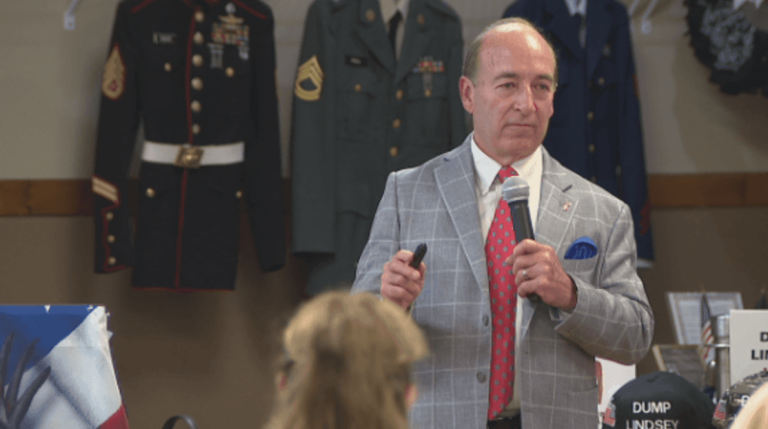
When longtime Dorchester County leaders Steven Wright and former Sheriff Ray Nash speak about someone’s character, their words carry weight. Their recent reflections on Solicitor David Pascoe highlight a story that has unfolded quietly for more than twenty years — a story of consistency, conviction, and conservative leadership.
For decades, Republican leaders across the Lowcountry encouraged Pascoe to join the GOP. Their reasoning was simple: his record already reflected conservative values. His approach to law enforcement, his partnership with local leaders, and his commitment to public safety aligned naturally with the principles many Republicans hold.
That alignment was clear from the start. In 2004, when Pascoe first ran for Solicitor, Sheriff Nash asked him a direct question: Why should conservatives support you? Pascoe didn’t hesitate. “Support me because I will always be the most conservative person in the race,” he said. Nash supported him then — and in every election that followed.
Over the next twenty years, Pascoe’s actions matched his words. His record includes:
- Supporting the firing squad when few others would take that position publicly
- Securing death‑row sentences for violent offenders
- Challenging judicial candidates he believed did not uphold the rule of law
- Consistently defending Second Amendment rights
- Partnering with churches to redirect troubled youth
- Leading an office that achieved the highest conviction rate in South Carolina
- Speaking early and openly about the dangers of illegal immigration
This long-standing record explains why every Republican Sheriff and Clerk of Court in Dorchester County has supported him for two decades. Those who worked alongside him saw firsthand how he led, how he made decisions, and how he stood firm under pressure.
Wright and Nash say they approached Pascoe multiple times about formally switching parties. The conversation resurfaced in 2024, when Pascoe expressed growing frustration with a Democratic Party that no longer reflected the values he was raised on. His decision to join the Republican Party, they emphasize, was rooted in conviction — not convenience.
When Pascoe finally made the switch, Wright called Nash with the news: “I finally did what we’ve been trying to do for twenty years. David Pascoe is officially a Republican.”
For Wright and Nash, the conclusion is simple. They have known David Pascoe a long time. They have watched him take on powerful interests, withstand political pressure from both sides, and remain steady in his principles. In their view, his record speaks for itself.