David Pascoe’s Party Switch
In the ever-evolving landscape of South Carolina politics, few stories capture the tension between principle and pragmatism quite like that of David Pascoe. A longtime prosecutor who built his career as a Democrat, Pascoe made headlines in April 2025 when he ditched the Democratic Party for the GOP, citing irreconcilable differences with his former party’s “soft on crime” stance.
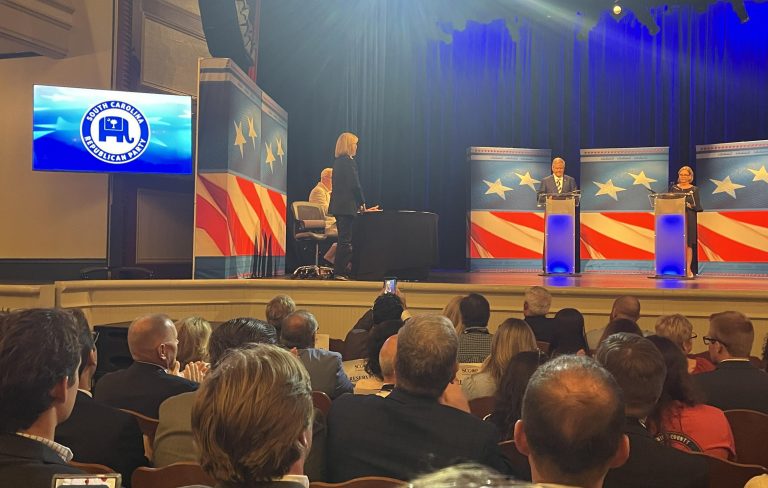
Just four months later, in August 2025, he threw his hat into the ring as a Republican candidate for South Carolina Attorney General, positioning himself as a corruption-busting conservative ready to shake up the status quo.
But as Republicans gear up for the 2026 primaries, the big questions loom: Should the GOP trust Pascoe? And just how conservative is he on the social issues that matter most to the base?
Pascoe’s journey reads like a political thriller with twists that could make even the most jaded voter skeptical. Raised in a conservative mold—he was a Republican during his college years at The Citadel. But after he moved to the heavily Democratic First Judicial Circuit, encompassing Calhoun, Dorchester, and Orangeburg counties, Pascoe shifted gears by running and winning as a Democrat for solicitor in 2004, holding the seat for over two decades.
During that time, he aligned himself with prominent Democrats, including former South Carolina Democratic Party chair Dick Harpootlian, who first hired Pascoe as an assistant solicitor back in 1991 and has publicly endorsed his 2026 AG bid.
Pascoe also showed openness to national Democratic figures, though he now distances himself from them. When pressed at a GOP meeting about whether he voted for Joe Biden or Kamala Harris, Pascoe dodged, vowing never to endorse D.C. candidates again.
The tipping point for Pascoe’s defection came in late 2024, when President Biden commuted the death sentences of 37 federal inmates—a move Pascoe decried as prioritizing criminals over victims. “That was the day I decided to leave the Democratic Party,” he said at his switch announcement. “I cannot, in good faith, be a member of a party that sheds more tears for violent criminals than for innocent victims.”
Pascoe has long painted himself as an outsider within the Democratic ranks, claiming the party “hated” him for his tough-on-crime views. Indeed, after his switch, South Carolina Democratic Party Chair Christale Spain accused him of opportunism, suggesting the move was purely to boost his chances in a Republican-dominated state. State Rep. Justin Bamberg, a Democrat, even called for Pascoe’s resignation, arguing he disenfranchised voters who elected him under the blue banner.
On the surface, Pascoe’s platform screams conservative bona fides, especially on social issues that fire up the GOP base:
- He’s vocally pro-life, emphasizing his opposition to abortion and criticizing Democrats for having “no room” for someone like him.
- As a prosecutor, he’s put “evil men on death row” and advocates expanding the death penalty to include child traffickers and rapists—a stance that aligns with hardline conservative views on justice and protecting the vulnerable.
- Pascoe is also a staunch Second Amendment supporter, decrying any encroachments on gun rights.
- On immigration, he’s unyielding: “If you’re here illegally, you should be captured and deported, no exceptions.”
Pascoe’s campaign promises to “crush corruption,” form a special unit to investigate politicians and lobbyists, and challenge federal mandates that he sees as liberal overreach. Initiatives such as these further bolster his conservative credentials.
Yet, trust issues persist. Pascoe’s long Democratic tenure and ties to figures like Harpootlian—a liberal icon in South Carolina politics—raise red flags for purists. Harpootlian, who has hammered Republicans on issues like abortion in the past, remains a vocal Pascoe booster, calling him an “extraordinary” potential AG.
Critics within the GOP whisper that Pascoe might be a “DINO” (Democrat in Name Only) turned “RINO” (Republican in Name Only), especially given his refusal to disclose past votes for Biden.
History shows party switchers can succeed in South Carolina—think Strom Thurmond’s legendary flip—but in today’s polarized environment, Pascoe will need to prove his switch is rooted in genuine conservatism, not electoral calculus. Pascoe himself addresses the skeptics head-on: “You can call me a DINO. You can call me a RINO… just don’t call me a liberal because I’m more conservative, especially on criminal justice issues.”
Pascoe has made inroads with Republican groups, earning applause for his anti-corruption rhetoric and pledges to reform the judiciary by limiting lawyer-legislators’ influence.
In a state where Republicans hold a supermajority Pascoe argues “conservatives are not really in charge” due to a “lawyer-legislator uniparty.” This has been a top issue with South Carolina Republicans recently, and his message resonates with grassroots reformers.
So, should Republicans trust David Pascoe? The answer isn’t black and white. His record on social issues—pro-life, pro-gun, pro-death penalty, anti-illegal immigration—checks many conservative boxes, potentially making him a strong contender against crime and corruption. But his Democratic past and lingering alliances demand scrutiny. As the primary approaches, GOP voters will decide if Pascoe’s switch is a homecoming to his conservative roots or a convenient pivot.
One thing is certain: In South Carolina’s rough-and-tumble politics, Pascoe’s bid will test the party’s appetite for redemption stories.
Stay tuned—this race is just heating up.